Appointment of Thomas Cromwell as Vicegerent in Spirituals
Wolf HallThomas Cromwell’s appointment as Vicegerent in Spirituals makes him the king’s deputy in church affairs and authorizes him to visit, inspect, and reform monasteries, closing them if necessary. It turns his knowledge of religious institutions and his experience in government into formal power over them, advancing the crown’s control of the church through administrative action as well as legislation.
Appointment and Authority
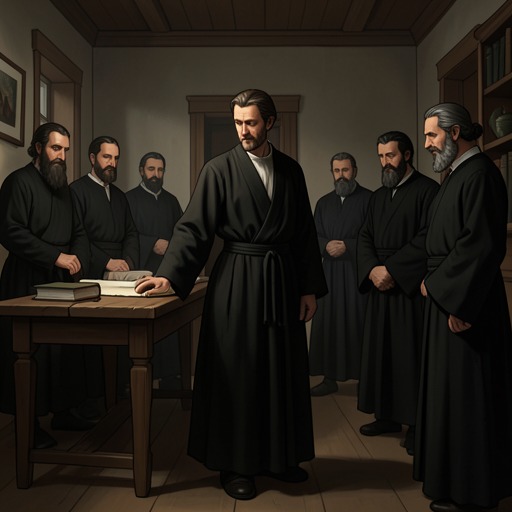
Early in the new year, Henry VIII gives Cromwell a title no one has held before: Vicegerent in Spirituals. The appointment arrives after three or more years of rumors that religious houses will be suppressed. Cromwell is no longer merely assessing the political and financial possibilities of reform; he now has delegated authority to inspect monasteries and determine whether they should be reformed or closed.
The office extends the king’s authority into the day-to-day governance of religious institutions. Its novelty is significant: Cromwell’s power derives from a royal appointment, while its practical reach includes the monasteries themselves. In the novel’s account, church reform becomes an executive responsibility entrusted to a royal deputy.
Preparation and Sources of Knowledge
Cromwell’s authority rests on preparation as well as appointment. His training under Thomas Wolsey has made him familiar with the affairs of abbeys, and information continues to reach him through letters. The reports come from different positions within religious communities: some monks complain of abuses, scandals, or disloyal superiors; others seek offices and promise lasting gratitude if Cromwell speaks for them.
This flow of petitions and complaints gives the new office an immediate working context. Monastic reform is not presented as a decision made in isolation: it depends on information gathered from people inside the institutions, whose interests and grievances may differ. Cromwell’s task is to turn that uneven stream of claims into knowledge the crown can use.
Political Setting and Connections
The appointment belongs to a broader accumulation of royal power. Before becoming Vicegerent, Cromwell has already brought a bill to suspend payments of annates to Rome before the Commons. He asks the House to divide, making members’ positions visible to the king; in the Lords, Henry must argue his own case in person. The sequence links parliamentary pressure over payments to the later grant of authority over religious houses: the crown’s reach into church affairs is being established through more than one instrument.
Cromwell’s position also depends on his political relationships. He has secured a seat in Parliament with the support of Henry VIII and Thomas Howard, Duke of Norfolk, while negotiating with Anne Boleyn and her circle amid rivalry over Wolsey’s fall and lands. Later, he maintains an unofficial exchange with Eustace Chapuys, whose gifts of olive oil and parmesan cheese are answered with capons. Such connections show the appointment operating within a court where formal office, access to the king, political bargaining, and private channels of information coexist.
Scope and Significance
The title gives Cromwell a specific power: to visit, inspect, and reform monasteries, and to close them if required. The evidence does not describe a particular closure carried out under this new authority, but it establishes the institutional consequences now within reach. The appointment converts years of rumor, accumulated knowledge, and royal policy into a mandate to act.
Its significance lies in the way it makes religious reform an instrument of government. Cromwell’s authority is personal in its delegation but institutional in its scope: it reaches across the monasteries of the realm and rests on the king’s power to appoint a deputy in church affairs. The appointment therefore marks a turning point from debate and preparation toward an administrative process capable of reshaping religious life.